CDL Prep 2026: Test Practice
Nam Nguyen UnisoftEducation
3.4111.00 Reviews
- Version
- 1.7.11
- Installs
- 100.00K
- Age Rating
- Everyone
Screenshots
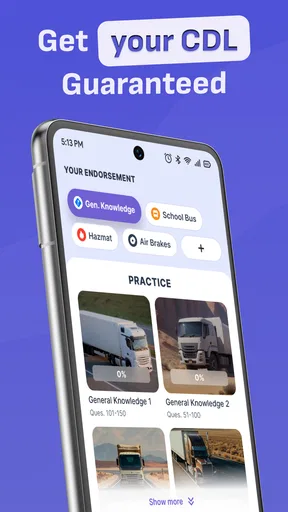
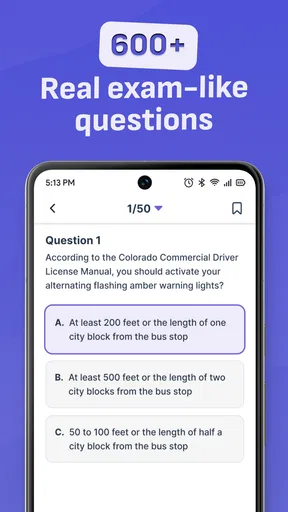
Our Review of CDL Prep 2026: Test Practice
 Analysis by Appyee
Preparing for a commercial driver’s license exam can feel less like ordinary studying and more like learning how to stay calm while sorting through a large set of rules, signs, safety decisions, and vehicle knowledge. CDL Prep 2026: Test Practice is an education app built around one clear job: giving me practice questions and mock-test sessions for CDL preparation. I found that focus useful because it turns spare moments into short study opportunities instead of asking me to organize a full course before I can begin.
The app is free to install and is suitable for Everyone, which makes it easy to try without committing money at the start. It comes from Nam Nguyen Unisoft and has passed the 100K+ install mark, so it is not an obscure tool that only a handful of learners have encountered. Its average rating is 3.4 from around 243 ratings, a mixed result that matches my overall impression: the app can be practical for repeated question practice, but it should be treated as a revision companion rather than a complete replacement for official preparation materials.
Practice tests are the app’s real strength
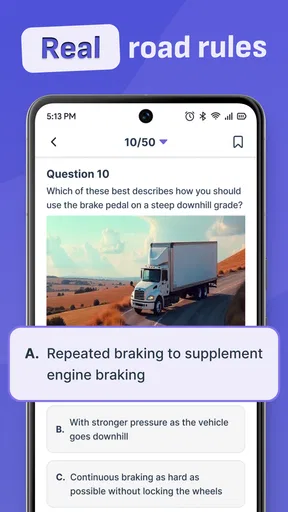
The most important capability here is the combination of easy practice and mock tests covering all states. That matters because CDL preparation is not simply about reading a topic once and hoping it stays in memory. I need to recognize the wording of a question, identify the relevant safety principle, and make a decision under a little pressure. Repeated testing helps expose whether I truly understand a subject or merely recognize a paragraph I read a few minutes earlier.
I like this approach more than a long, uninterrupted manual when I am already familiar with the basics. A practice question forces me to commit to an answer. If I get it wrong, the mistake becomes a clear signal about what deserves another look. That is more useful than passively scrolling through pages and feeling confident simply because the material looks familiar.
The state coverage is also an important part of the app’s identity. CDL requirements and test expectations can vary by location, so a learner should begin by thinking about the state in which the exam will actually be taken. I would not use every available question set indiscriminately and assume that more questions automatically mean better preparation. The better workflow is to use the relevant state practice as the main track, then use broader material only when I want extra revision or a wider review of common CDL subjects.
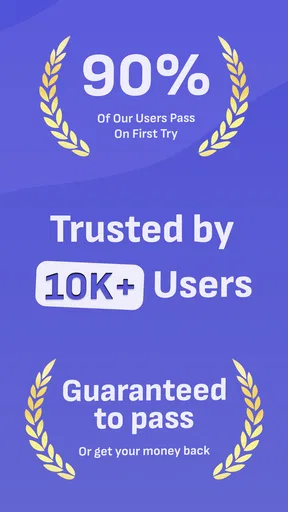
The key benefit is active recall, not the promise of a guaranteed license. The store summary presents the app as a way to get a CDL guaranteed, but no practice app can replace the learner’s responsibility to understand the rules, meet local requirements, and pass the real examination. I see the strongest value in the testing format itself: it shows me where I hesitate and gives me a repeatable way to work on those weak points.
Why mock tests feel different from casual quizzes
A casual quiz is useful when I have only a few minutes, perhaps while waiting for an appointment or taking a break during work. A mock test serves a different purpose. It gives me a more realistic study session in which I have to maintain concentration across several questions instead of relying on a lucky answer or a familiar opening phrase.
I recommend separating those two modes mentally. I use short practice sessions to learn and diagnose. I use mock tests to check whether the knowledge is holding together. If I only take quick quizzes, I may become good at individual questions without developing the steady attention needed for an exam. If I only take mock tests, I may see a poor result without understanding which subject caused the problem. Alternating between them makes the app more useful than treating every session as the same activity.
How I would use it during a normal study week
My first step would be to choose the state and exam area that matches my immediate goal, rather than jumping randomly between topics. Then I would take a short practice session without looking at outside notes. The point of that first attempt is not to chase a perfect result; it is to reveal the questions that slow me down, the subjects I confuse, and the wording I misread.
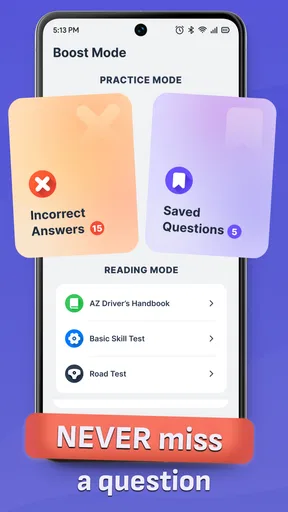
After that session, I would keep a small error list outside the app. This is one of the most useful habits because a test score alone is not a study plan. I would write down the topic behind each missed question in plain language, such as a vehicle inspection issue, a safety rule, or a distinction between two similar answers. On the next visit, I would focus on those themes before taking another full mock test.
This workflow also prevents a common problem with test-preparation apps: memorizing answer patterns instead of learning the reason behind them. When I miss a question, I would not simply repeat it until the correct option feels familiar. I would pause and ask what safety principle makes that answer right. If the explanation or context is not enough for me to understand the reason, I would check an official handbook or another trusted study source. The app is best at rehearsal; a handbook remains better for authoritative detail and deeper explanation.
A realistic scenario would be a new driver studying after a shift. I might have only fifteen or twenty minutes before dinner, so opening a large textbook could feel like too much effort. A short practice set gives me an immediate starting point. On a day off, I could then attempt a mock test and compare the mistakes with the notes from those shorter sessions. That rhythm is more sustainable than waiting for one large block of free time that may never appear.
Using wrong answers as a personal revision map
One non-obvious advantage of this kind of app is that mistakes can become more valuable than correct answers. When I answer correctly because I genuinely know the rule, I can move on. When I answer correctly by guessing between two options, I should mark that question as uncertain anyway. Guessing is a warning sign because it may fail when the wording changes on the real exam.
I would also avoid repeating a test immediately after finishing it. An instant retake can produce an inflated sense of progress because I still remember the sequence and the answers. Waiting until later, then returning to the same topic in a different session, gives me a better indication of whether I learned anything. This is a simple trade-off: slower visible improvement, but more honest preparation.
Another useful tactic is to change the purpose of each session. One session can focus on speed and confidence. The next can focus on careful reading, especially when two options appear almost identical. A third can be a mock-test check with no notes nearby. Since the app centers on practice and mock testing, I can create this variety through my own routine even when the basic activity remains answering questions.
The current version is 1.7.11, and the minimum requirement is Android 8.0. That makes the app accessible to people using older compatible Android phones, which is helpful for learners who do not want to buy a new device just to study. I would still keep the phone updated and make sure the app runs comfortably before relying on it as my only study tool, especially if I prefer a larger screen for reading questions.
The best use case: focused preparation close to exam day
I think this app is most effective for someone who already knows the exam they are targeting and needs structured repetition. A learner close to test day can use it to identify weak areas, build a regular routine, and become comfortable answering under time pressure. It is also a good fit for someone who studies in small pieces: a professional driver between responsibilities, a student using commuting time, or a person who loses focus during long reading sessions.
It is less convincing as a first and only resource for a complete beginner. Someone who has never studied CDL material may need explanations, diagrams, official wording, and a clear learning sequence before practice questions become meaningful. If I do not understand why an answer is correct, repeatedly selecting it will not prepare me for a differently worded question. In that situation, I would begin with the official state handbook or a thorough course, then use this app to test retention.
The state-focused design can also help a learner avoid a costly mistake: preparing for the wrong jurisdiction. Before investing serious time, I would confirm the exact license class, endorsements, and exam requirements that apply to me through official state resources. The app can support that preparation, but it should not be the authority for administrative details or the final word on eligibility.
For a driving school student, the app could work well between classroom lessons. I could use it to turn a teacher’s recent topic into a quick self-check, then bring specific uncertainties back to class. That is more productive than asking a broad question such as “What should I study?” because the missed questions give me a concrete starting point.
When another option is better
If I learn best through video demonstrations, instructor feedback, or detailed visual explanations, a question-based app may feel too narrow. It does not replace time spent understanding vehicle systems, safe operating habits, or practical inspection routines. Likewise, a learner who needs a carefully sequenced curriculum may prefer a full course that introduces concepts before testing them.
Printed material can also be better in certain situations. A handbook is easier to annotate, compare, and consult when I want the exact official language in front of me. A classroom or instructor is better when I keep making the same kind of mistake and cannot explain the underlying rule. I would use CDL Prep 2026 as the active practice layer, not as a reason to discard those stronger sources.
The app’s 3.4 average suggests that the experience will not satisfy everyone equally. Around 111 written reviews indicate that users have had enough varied experiences to produce more than a handful of comments, but a mixed rating is still a reminder to keep expectations realistic. I would install it, test the relevant material, and judge whether the question style suits me before paying for anything.
Free access, optional spending, and practical limits
The app is free, which lowers the barrier to trying its basic study approach. That is important for a learner who is comparing several preparation tools and does not yet know whether short quizzes will fit their routine. There are in-app purchases ranging from $8.99 to $74.99 per item, so I would pay attention to what is available without purchase and decide whether any upgrade genuinely adds value to my study plan.
I would not buy extra content simply because I had a disappointing mock-test result. A low result usually means I need better review, not automatically more material. First I would use the free access consistently, compare my mistakes across several sessions, and identify whether the limitation is a missing topic, weak understanding, or poor concentration. Only then would a paid option make sense, and even then I would compare it with an official handbook or a complete course.
There is also a psychological limitation to repeated testing. Seeing familiar questions can make me feel ready before I can handle unfamiliar wording. To reduce that risk, I would use the app alongside reading and explanation, not just chase high scores. I would also avoid treating a perfect practice result as proof that the real exam will be easy. The most honest sign of progress is being able to explain the rule without seeing the answer choices.
Another point is convenience versus depth. The app makes it easier to start studying, but that convenience can encourage shallow sessions. Ten rushed questions are not always better than five carefully reviewed ones. I would rather finish a smaller session and understand every mistake than race through a large set while distracted. The app gives me the structure; the quality of the learning still depends on how deliberately I use it.
Who will gain the most from this preparation style
I would recommend it most strongly to a learner who already has access to reliable CDL information and wants a portable way to rehearse. It suits people who need repeated exposure to test-style questions, who can study independently, and who are willing to maintain their own error log. The all-state scope is particularly useful when I want to align practice with my location instead of relying on a generic quiz source.
It can also help a confident learner who keeps postponing preparation. Opening a short practice session is less intimidating than planning an entire study evening. Once I see which questions I miss, the next step becomes specific. That small reduction in friction may be the app’s most practical everyday benefit.
I would be more cautious recommending it to someone who expects a guaranteed pass, wants official legal guidance, or needs a complete teaching course from the first lesson onward. Those users should start with authoritative state material and, where necessary, an instructor. They can still add this app later for repetition, but the order matters: understand first, rehearse second, and verify before the exam.
Overall, my view is positive but measured. CDL Prep 2026: Test Practice is a focused education app for turning CDL revision into regular question practice and mock-test sessions. Its free entry, broad state orientation, and compatibility with Android 8.0 or later make it easy to try. I would keep it in my study routine if I wanted a quick way to expose weak areas, but I would pair it with official material and avoid confusing repeated answers with complete knowledge.
For me, the deciding question is simple: do I need another textbook, or do I need a tool that makes me actively answer? If the answer is the second one, this app is worth exploring. If I still need the concepts explained from the ground up, I would choose a fuller resource first and return here when I am ready to measure what I actually remember.
Verdict
Strengths of CDL Prep 2026: Test Practice
- Covers updated CDL-style questions for several commercial license categories.
- Practice mode helps identify weak topics before taking the real exam.
- Short quizzes make it convenient to study during breaks or commutes.
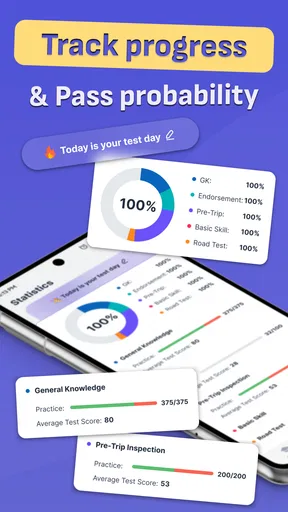
- Progress tracking makes it easier to monitor preparation over time.
- Useful for reviewing road signs, safety rules, and endorsement-related material.
Limitations of CDL Prep 2026: Test Practice
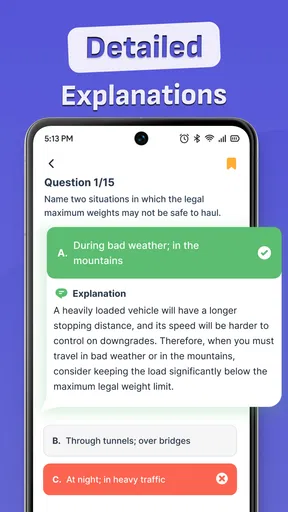
- Some explanations may be too brief for learners who need detailed instruction.
- The app cannot replace official state manuals or local testing requirements.
- Certain features or question sets may require an in-app purchase.
- Question wording may differ from the exact exam used in your state.
- Frequent reminders or ads could become distracting during study sessions.
Similar Picks in This Category
View All
Duolingo: Language Lessons
Duolingo4.7

Google Classroom
Google LLC2.8

Unacademy: Learn & Crack Exams
Unacademy3.2

Bible App for Kids
Life.Church4.4

Cake - Learn English & Korean
Cake Corp.4.7

Brainly: AI Homework Helper
Brainly4.5
Frequently Asked Questions
What is CDL Prep 2026: Test Practice?
CDL Prep 2026: Test Practice is a study app designed to help aspiring commercial driver’s license applicants prepare for written knowledge exams. It typically includes practice questions covering important CDL subjects such as general knowledge, air brakes, combination vehicles, hazardous materials, passenger vehicles, and other endorsements. The app is best used as a revision tool alongside the official driver manual for your state.
Can CDL Prep 2026 help me pass the official CDL exam?
The app can improve your preparation by letting you review realistic questions, identify weak areas, and become familiar with the format of a knowledge test. However, it cannot guarantee a passing score because CDL requirements and questions may vary by state and may change over time. For the most reliable preparation, compare the app’s material with your state’s current official CDL handbook.
Does the app cover CDL endorsements and specialized tests?
CDL Prep 2026: Test Practice may include practice categories for common endorsements, such as air brakes, combination vehicles, tanker, passenger, school bus, doubles and triples, or hazardous materials. The exact availability can depend on the app version and your device. Before downloading, check the current feature list to confirm that it supports the endorsement or license class you plan to pursue.
Can I use CDL Prep 2026 offline?
Many test-preparation apps allow users to study at least some questions without an internet connection after installation, which is useful while traveling or taking breaks away from Wi-Fi. Nevertheless, certain features, advertisements, progress synchronization, updates, or premium content may require connectivity. It is a good idea to open the app once online and verify which practice tests remain available offline.
Is CDL Prep 2026: Test Practice free to download?
The app may be available as a free download, but free access can include advertisements, limited question sets, or optional in-app purchases for additional tests and features. Pricing and included content can change depending on the platform and region. Review the Google Play or App Store listing carefully before installing, especially if you want unrestricted access or prefer a completely ad-free study experience.
